By Janvi Patidar | 10 February 2026

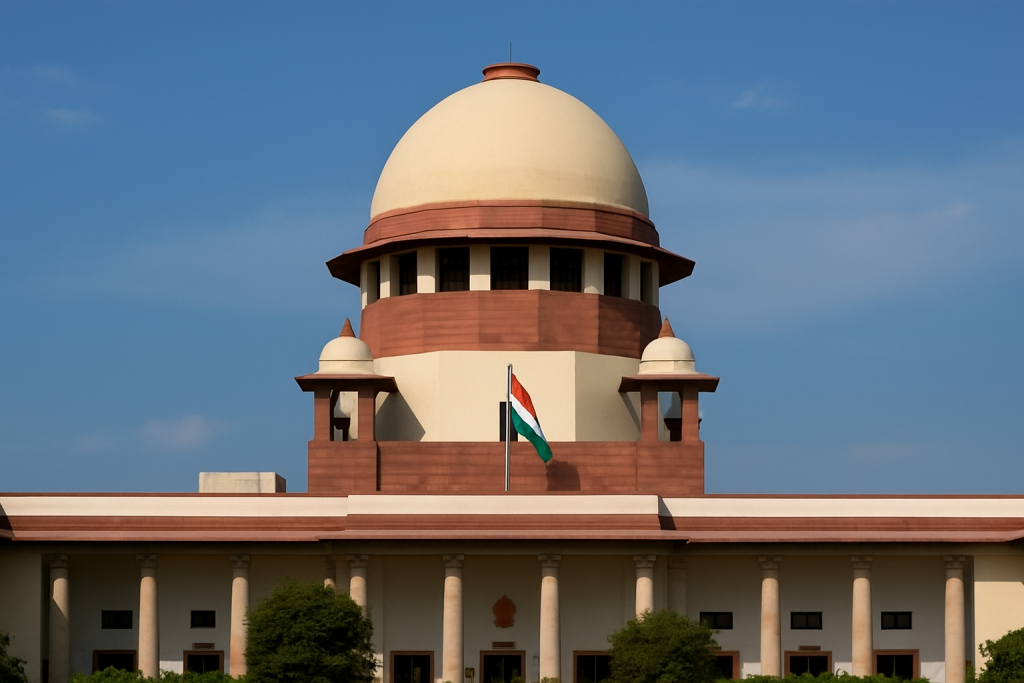
The Supreme Court of India is examining whether doctors under Consumer Protection Act should continue to be treated as service providers under consumer law. In Association of Healthcare Providers (India) v. Union of India & Ors., W.P. (C) No. 110/2026, the Court has issued notice to the Union Government and the National Medical Commission (NMC).https://www.sci.gov.in
This issue traces back to the landmark judgment of Indian Medical Association v. V.P. Shantha (1995). In that case, the Supreme Court brought medical services under consumer law. The present case may change that long-standing legal position of whether doctors regulated by Consumer Protection Act 2019
This matter is important for CLAT UG, CLAT PG, Judiciary exams, and law entrance tests. It involves consumer protection, medical negligence, and professional liability.
What Is the Case About?
The petition before the Supreme Court challenges the continued inclusion of doctors under Consumer Protection Act. The Association of Healthcare Providers (India) has argued that doctors and hospitals should not be classified as “service providers” for the purpose of consumer disputes.
A Bench led by Chief Justice of India Justice Surya Kant, along with Justices Joymalya Bagchi and N.V. Anjaria, is currently considering the matter and has sought responses from the government and the NMC.
What Does the Petitioner Seek?
The petitioner has made two key demands before the Court.
First, it has asked for a declaration that medical services do not fall under the Consumer Protection Act, 2019.
Second, it has requested that consumer courts should not entertain complaints against doctors and hospitals under consumer law.
Therefore, the association wants a complete exclusion of healthcare services from the consumer dispute mechanism.
Legal Background: V.P. Shantha Judgment
This debate on doctors under Consumer Protection Act 2019 began with Indian Medical Association v. V.P. Shantha (1995), which held that medical services fall under consumer law (read full judgment here).
In this case, the Supreme Court held that medical services provided for consideration fall within consumer law. This ruling allowed patients to file consumer complaints for medical negligence. For nearly thirty years, this judgment has guided consumer cases against doctors.
Arguments Raised by the Doctors’ Association
The petitioner argues that medical practice is fundamentally different from commercial or consumer services. According to them:
- Doctors work in uncertain and high-risk conditions where outcomes cannot be guaranteed.
- Medical decisions depend on professional skill and judgment, not on assured results like consumer goods.
- Treating healthcare as a consumer service weakens the trust-based doctor–patient relationship.
Moreover, the association has relied on a previous Supreme Court judgment that excluded advocates from the Consumer Protection Act, arguing that the medical and legal professions share similar characteristics.
Concern Over Defensive Medicine
Another major concern raised is the growing practice of defensive medicine. Doctors argue that fear of consumer litigation forces them to:
- Avoid taking necessary medical risks, even during emergencies.
- Make treatment decisions based on legal fear rather than patient welfare.
Additionally, they claim that consumer courts often lack the technical expertise required to evaluate complex medical issues related to diagnosis and treatment.
Existing Regulatory Framework for Doctors
The association has also pointed out that doctors are already regulated by the National Medical Commission (NMC). The NMC has statutory powers to inquire into professional misconduct and impose disciplinary action.
Therefore, according to the petitioner, cases of medical negligence can be effectively addressed through professional regulatory mechanisms without invoking consumer law against doctors under Consumer Protection Act 2019.
Conclusion
The Supreme Court has not yet decided whether doctors under Consumer Protection Act 2019 should be excluded from the consumer law framework. At this stage, the Court has only sought responses from the Union Government and the National Medical Commission.
However, the final judgment in this case could significantly alter the law on medical negligence in India and redefine the legal relationship between doctors and patients.
Case Reference:
Association of Healthcare Providers (India) v. Union of India & Ors., W.P. (C) No. 110/2026
FAQ: Are doctors covered under the Consumer Protection Act 2019?
Yes, at present, doctors under Consumer Protection Act 2019 are treated as service providers based on the Supreme Court’s ruling in Indian Medical Association v. V.P. Shantha (1995). This allows patients to file consumer complaints for medical negligence. However, the Supreme Court is currently examining whether doctors should continue to fall under consumer law. The final decision may change the existing legal position.