Also Written By: Janvi Patidar
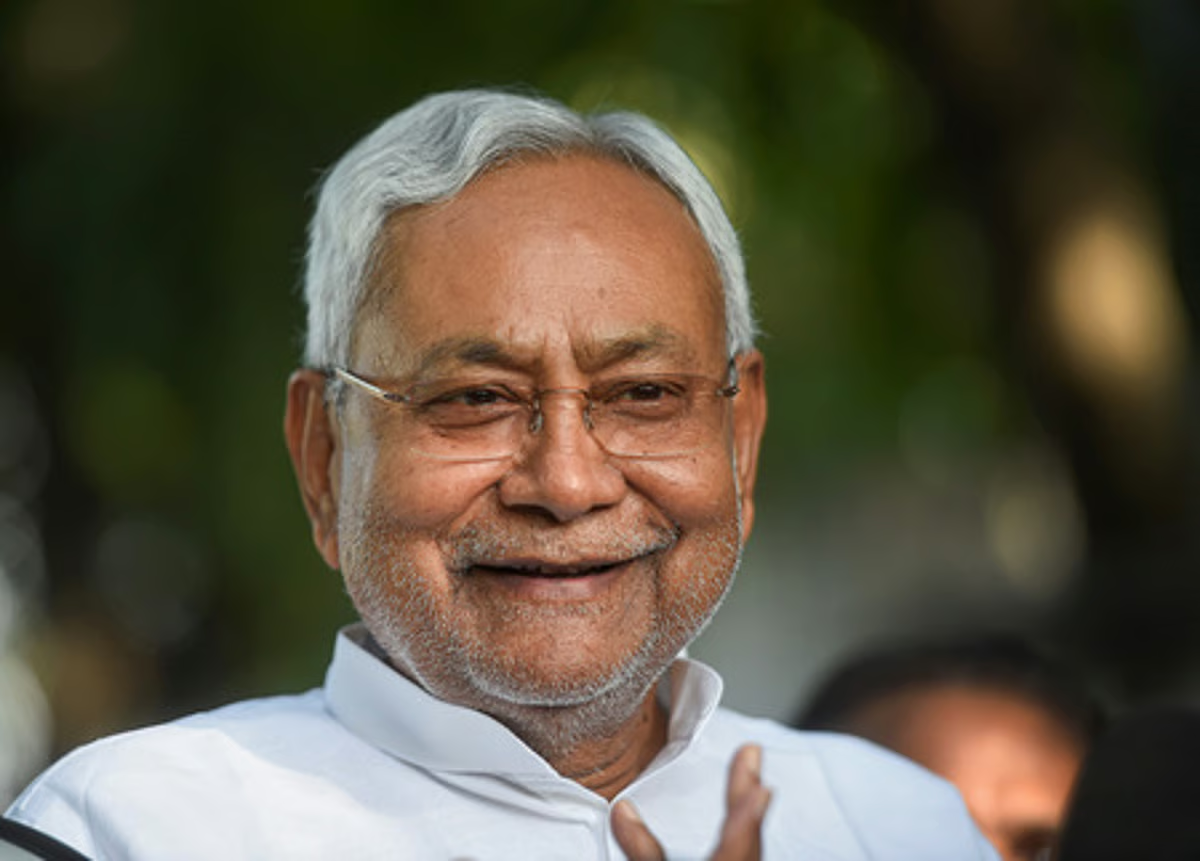
The announcement by Nitish Kumar to contest the Rajya Sabha elections marks more than a political transition in Bihar it signals the closing of a constitutional chapter that shaped state governance for over two decades. As Bihar’s longest-serving Chief Minister prepares to vacate office, questions naturally arise:
Is the transition constitutionally valid?
What provisions govern such resignation and succession?
Does the move implicate anti-defection law under the Tenth Schedule?
And what does it reveal about the evolving federal balance within coalition politics?
This editorial Nitish Kumar set to resign as CM: A Constitutional and Political Analysis the development not merely as a political event, but as a constitutional moment.
I. The Factual Trigger: Resignation and Rajya Sabha Bid
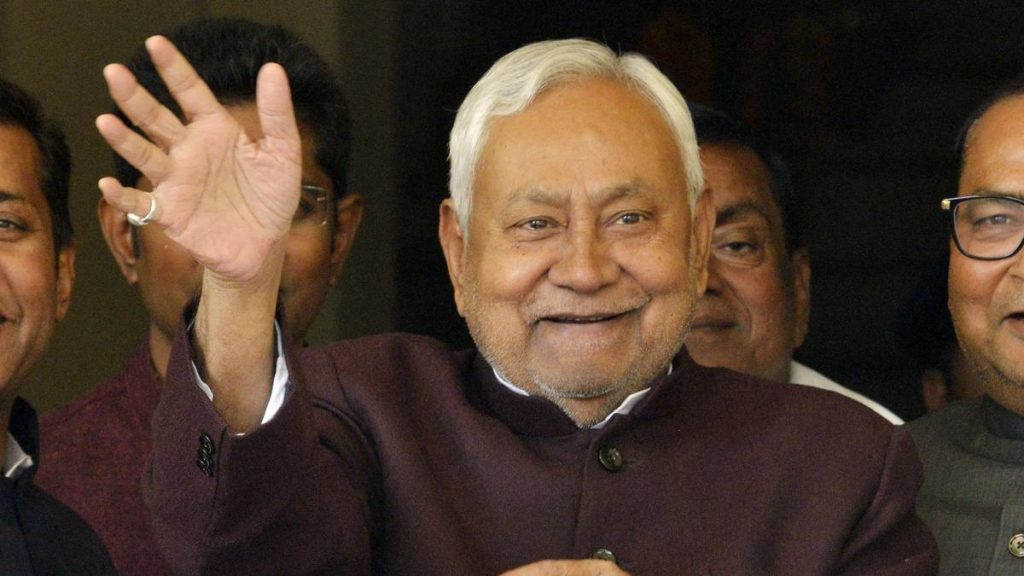
On March 5, 2026, Nitish Kumar declared his intention to seek election to the Rajya Sabha, effectively stepping down as Chief Minister. For a leader who first assumed the office in 2000 and consolidated power in 2005, this decision closes a defining era in Bihar politics.
The transition occurs within the framework of the Janata Dal (United) and its alliance with the Bharatiya Janata Party under the National Democratic Alliance (NDA). Politically symbolic though it may be, constitutionally it must be tested against explicit provisions of the Constitution of India.
II. Constitutional Framework
1. Article 164(1): Appointment of the Chief Minister
Under Article 164(1):
“The Chief Minister shall be appointed by the Governor.”
The Governor appoints the leader who commands majority support in the Legislative Assembly. The Constitution does not prescribe a fixed tenure; the office is contingent upon legislative confidence.
2. Article 164(2): Collective Responsibility
Article 164(2) provides:
“The Council of Ministers shall be collectively responsible to the Legislative Assembly of the State.”
Thus, the Chief Minister’s continuance depends upon:
- Majority support in the Assembly; and
- Absence of voluntary resignation.
3. Article 164(4): Six-Month Rule
A person not a member of the legislature may be appointed as Minister (including Chief Minister), but must secure membership within six months. This underscores the constitutional link between executive authority and legislative legitimacy.
4. Pleasure of the Governor — A Constitutional Fiction
Though ministers hold office “during the pleasure of the Governor,” constitutional convention clarifies that this pleasure is not personal discretion; it reflects the will of the majority in the Assembly.
Therefore, a voluntary resignation by the Chief Minister is fully constitutional.
III. Nitish Kumar set to resign as CM isValid?
Yes — unequivocally.
The constitutional process follows a structured sequence:
- Chief Minister submits resignation to the Governor.
- Governor accepts resignation.
- Governor invites a leader who commands majority support.
- Oath is administered under Article 164.
No constitutional bar prevents a sitting Chief Minister from resigning and contesting parliamentary elections.
The Constitution neither restricts upward movement (State to Union legislature) nor treats such transition as destabilizing per se.
IV. Rajya Sabha Entry: Constitutional Basis
Membership of the Rajya Sabha is governed by Article 80 of the Constitution.
Article 80(4) provides that representatives of States in the Council of States shall be elected by the elected members of the Legislative Assembly through proportional representation by means of the single transferable vote.
There is no constitutional incompatibility in:
- A Chief Minister resigning;
- Contesting Rajya Sabha;
- Being elected with legislative party support.
Further, no disqualification arises under Article 102 (grounds for disqualification for membership of Parliament).
Therefore, from a strictly constitutional standpoint, the move aligns with federal representative design.
Also read:https://vidhigya.com/blog/landmark-judgments-2025-2026-for-clat-pg/
V. Does the Tenth Schedule (Anti-Defection Law) Apply?
The Tenth Schedule, inserted by the 52nd Constitutional Amendment Act, 1985, addresses legislative defections.
Grounds of Disqualification under Paragraph 2:
An MLA may be disqualified if:
- They voluntarily give up party membership; or
- They vote/abstain contrary to party whip without permission.
Application to Present Case
Resignation as Chief Minister does not equal:
- Giving up party membership;
- Defying party whip;
- Legislative defection.
The office of Chief Minister is executive. The Tenth Schedule applies to legislative conduct — not executive repositioning.
If Nitish Kumar:
- Continues as member of JD(U); and
- Seeks Rajya Sabha seat with party support,
no anti-defection issue arises.
Schedule 10 would activate only if:
- MLAs defect;
- Whip is violated during a floor test;
- Two-third merger threshold (Paragraph 4) is not met in case of party merger.
Thus, the anti-defection law remains constitutionally dormant in this scenario.
VI. Was There Any Constitutional Crisis?
A constitutional crisis emerges when:
- Majority is uncertain;
- Floor test is denied;
- Article 356 (President’s Rule) is invoked;
- Governance breakdown occurs.
None of these conditions are evident.
If the NDA commands majority and proposes a successor — likely from BJP — the Governor’s constitutional obligation is straightforward.
Hence, the development is political recalibration, not constitutional rupture.
VII. Federalism and Coalition Realignment
Bihar has historically shaped national political narratives:
- Anti-Congress mobilization in the 1960s–70s
- The JP Movement under Jayaprakash Narayan
- Mandal-era social justice transformation
- Subaltern caste assertion
Nitish Kumar embodied the Lohia–JP socialist legacy. His departure may signify:
- Generational shift;
- BJP’s structural ascendancy within alliance;
- Movement toward centralized party dominance.
While constitutionally neutral, politically this may recalibrate the federal balance between regional identity and national party command.
VIII. Internal Party Democracy and Succession
Speculation regarding leadership grooming within JD(U) raises normative — not constitutional — concerns.
The Constitution does not regulate internal party succession unless:
- It affects legislative majority;
- It triggers anti-defection provisions.
Thus, constitutional scrutiny ends where legislative arithmetic remains stable.
Democratic morality, however, invites broader reflection on dynastic tendencies within regional formations.
IX. Nitish Kumar’s Legislative Milestone
With Rajya Sabha entry, Nitish Kumar would complete representation in:
- Lok Sabha
- Bihar Legislative Assembly
- Bihar Legislative Council
- Rajya Sabha
Few leaders have traversed all four legislative platforms. This institutional mobility underscores a rare federal-political arc.