Also Written By: Janvi Patidar | Legal & Current Affairs Faculty
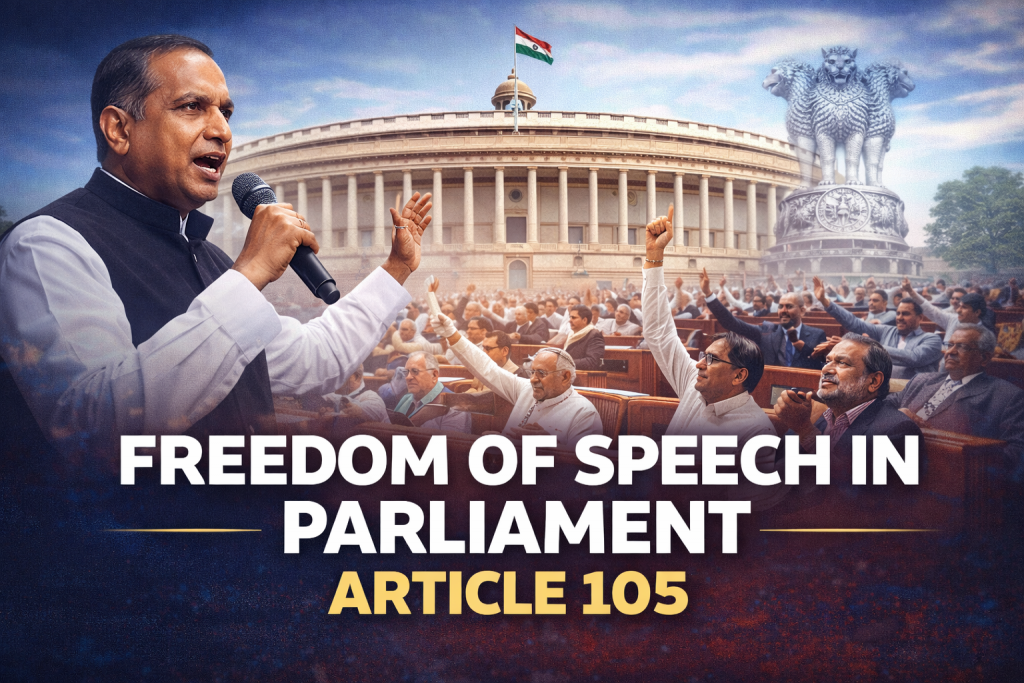
The freedom of speech in Parliament under Article 105 is one of the most important constitutional protections given to Members of Parliament (MPs). This freedom allows MPs to speak openly, question the government, and raise public concerns inside the House without fear of legal action. However, this freedom is not absolute. Instead, the Constitution and the rules of Parliament regulate it.
Recently, events in Parliament have raised concerns about whether authorities are restricting the freedom of speech in Parliament under Article 105 too harshly. Therefore, it is important to clearly understand what Article 105 actually guarantees and what limits it imposes.
What Does Article 105 of the Constitution Say?
Article 105 of the Constitution gives MPs two major privileges:
First, it guarantees freedom of speech in Parliament. This means MPs can speak freely in the House without facing court cases for what they say during debates.
Second, it provides immunity from legal proceedings for speeches and votes given inside Parliament. As a result, no court can question an MP for statements made during official proceedings.
However, this freedom exists within the Constitution and the rules of the Houses. Therefore, MPs must follow parliamentary discipline while exercising their right to speak.
Can Parliamentary Rules Limit Article 105?
Yes, but only to regulate conduct—not to silence voices. For example, the rules of the Lok Sabha and Rajya Sabha restrict MPs from:
- Speaking on matters pending before courts
- Making personal or defamatory allegations
- Questioning the integrity of fellow members
- Making allegations without prior notice
Moreover, Rule 380 allows the Speaker or Chairman to expunge only offensive words from records. However, they should not remove full arguments or entire paragraphs. Otherwise, the freedom of speech in Parliament under Article 105 loses its meaning.
Recent Controversy Over Expunging Speeches
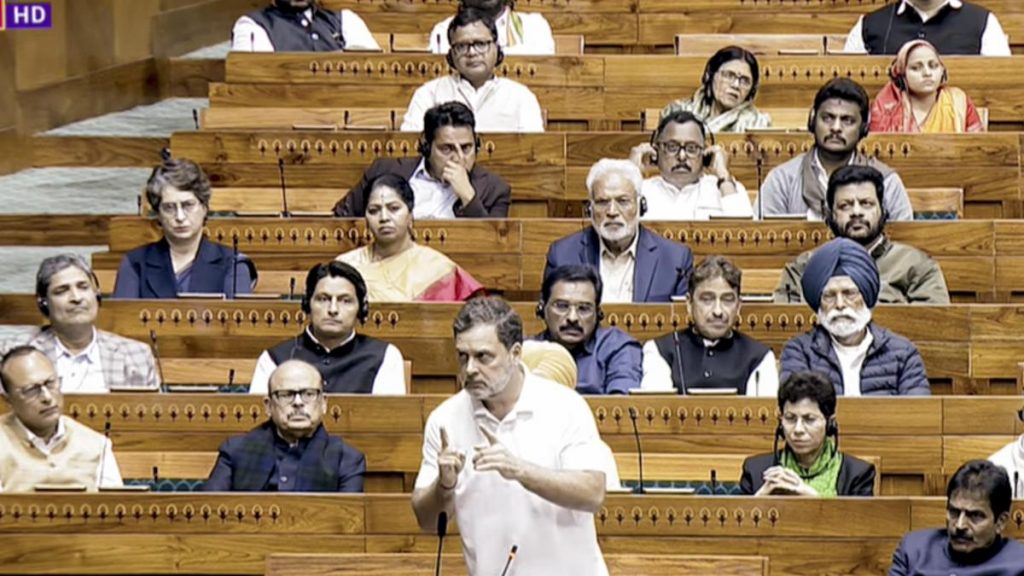
Recently, the Leader of the Opposition in the Rajya Sabha, Mallikarjun Kharge, objected to large parts of his speech being removed from official records. As a result, the remaining record became unclear and incomplete.
Such actions raise serious legal concerns. If authorities remove major portions of speeches, they weaken the protection given by Article 105. Moreover, Parliament debates form part of India’s democratic history. Therefore, officials must preserve them fairly.
Constitutional Balance and Democratic Values
Importantly, Article 121 of the Constitution restricts discussion on judges of the Supreme Court of India and High Courts, except during impeachment. This shows that the Constitution itself balances free speech with dignity and institutional respect.
Furthermore, democratic tradition demands tolerance of criticism. Leaders like Jawaharlal Nehru respected the role of the Opposition and encouraged open debate. Therefore, Parliament must allow disagreement without punishment.
Why Article 105 Is Crucial for Democracy
The freedom of speech in Parliament under Article 105 protects democracy from authoritarian control. When MPs speak freely, citizens hear uncomfortable truths. However, when authorities misuse rules to silence critics, Parliament loses credibility.
Therefore, Parliament must use rules to maintain dignity—not to suppress dissent. Only then can Article 105 serve its true constitutional purpose.
Also read: U.S. Supreme Court Rejects Trump Tariffs: Impact on India Explained