Also Written By: Janvi Patidar | Legal & Current Affairs Faculty
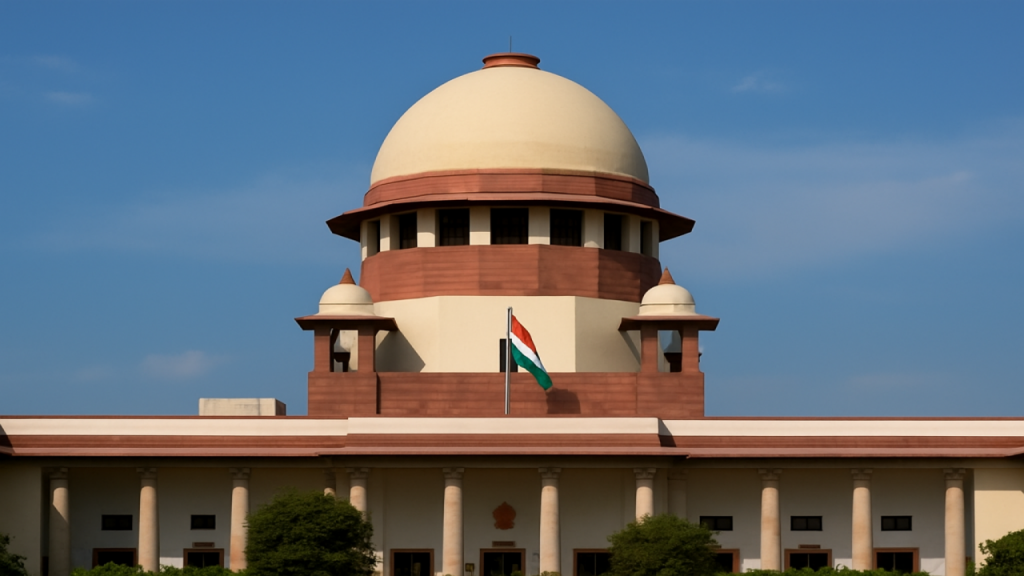
Legal Affairs February 2026 marks a crucial phase in Indian constitutional and regulatory law. The Supreme Court revisited long-standing precedents on religious freedom, judicial dignity, consumer protection in healthcare, judicial recruitment, environmental governance, and the balance between privacy and transparency. Simultaneously, the Union Cabinet initiated constitutional procedure to rename Kerala as “Keralam”, raising questions about Article 3 powers. This blog presents case background, legal questions, what the Court has held so far, and implications for the legal fraternity.
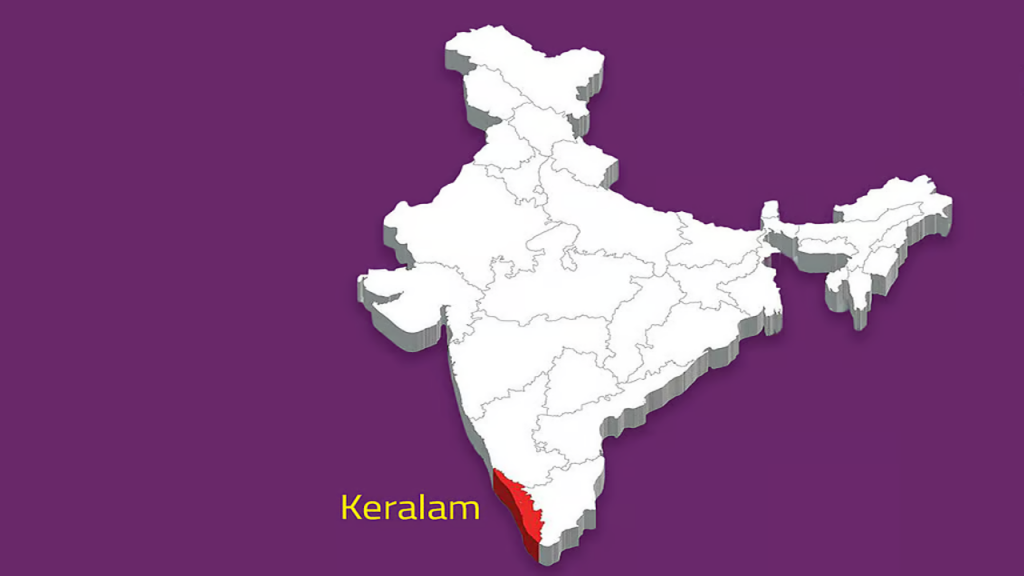
Kerala (Alteration of Name) Bill, 2026 – Renaming Kerala as “Keralam”
Case / Issue Background
The Union Cabinet approved the Kerala (Alteration of Name) Bill, 2026, following a 2024 resolution of the Kerala Legislative Assembly seeking to restore the state’s Malayalam name “Keralam”. The original anglicised name “Kerala” was used in the First Schedule of the Constitution after linguistic reorganisation in 1956.
Constitutional Framework
- Parliament’s power flows from Article 3 of the Constitution
- The process requires Presidential recommendation, reference to the State Legislature for views, passage by simple majority, and Presidential assent
- On assent, the First Schedule stands amended
Judicial Limits on Article 3
In Berubari Union Case, the Supreme Court clarified that Article 3 does not extend to cession of Indian territory to a foreign state, which would require a constitutional amendment. While name changes fall squarely within Article 3, Berubari remains the leading authority on the outer limits of Parliament’s power.
Why It Matters
This development is relevant for federalism, constitutional procedure, and questions on the scope of Parliamentary power over states.
Sabarimala Review – Reconsideration of 2018 Verdict by Nine-Judge Bench

Case Background
- 1991: Kerala High Court upheld restriction on entry of women aged 10–50
- 2006: Challenge filed by Indian Young Lawyers Association to Rule 3(b)
- 2018: 4:1 Constitution Bench struck down the exclusion as unconstitutional
- 2019–2020: Review petitions referred to larger bench
- 2026: Supreme Court schedules hearings before a nine-judge bench
Core Constitutional Questions
- Can essential religious practices override Articles 14 and 15 (equality and non-discrimination)?
- Is the exclusion protected under Article 25 (freedom of religion)?
- Do denominational rights under Article 26 permit gender-based exclusion?
What the Court Has Held So Far
The Court has not stayed the 2018 judgment but has found the questions to have wide constitutional ramifications, justifying reference to a larger bench. The forthcoming hearings will potentially redefine the doctrine of essential religious practices and the relationship between faith and equality.
Implications
This case will shape future disputes involving temple entry, religious autonomy, and gender justice.
Also Read: Sabarimala Review Petition Pending Before Larger Bench
https://vidhigya.com/blog/sabarimala-review-petitions-larger-bench/
Does the DPDP Act Dilute RTI? – Venkatesh Nayak v Union of India (2026)

Background
The Digital Personal Data Protection Act, 2023 amended Section 8(1)(j) of the RTI Act. Earlier, personal information could be disclosed where larger public interest existed. The amendment introduces a broader exemption for personal data.
Legal Issues Raised
- Whether the amendment unconstitutionally weakens the Right to Information
- Whether the Act creates a chilling effect on investigative journalism due to heavy penalties
- Whether government powers under Section 36 enable disproportionate surveillance
- Whether the Data Protection Board lacks institutional independence
What the Supreme Court Has Done
- Issued notice to the Union Government
- Refused interim stay on the statute
- Referred the matter to a Constitution Bench
Significance
The case tests the constitutional balance between privacy (Article 21) and freedom of speech and information (Article 19(1)(a)), and may redefine India’s transparency regime.
Also read; Digital Personal Data Protection Act Faces Constitutional Challenge in Supreme Court
3-Year Bar Practice Rule for Judges – Chandrasen Yadav v Union of India (2025 Review)
Background
In 2025, the Supreme Court mandated minimum three years’ Bar practice for entry into judicial services, citing the need for courtroom exposure.
Issues in Review
- Alleged disregard of Shetty Commission recommendations
- Lack of empirical data supporting the rule
- Socio-economic exclusion of first-generation lawyers
- Exclusion of law firm associates, PSU legal officers, corporate lawyers
Current Status
The Court has agreed to hear the review in open court, signalling the seriousness of the challenge.
Why This Matters
The outcome will determine access to the judiciary as a profession, diversity on the Bench, and the future design of judicial recruitment policy.
NCERT Class 8 Textbook Ban – Contempt of Court Jurisdiction
Case Background
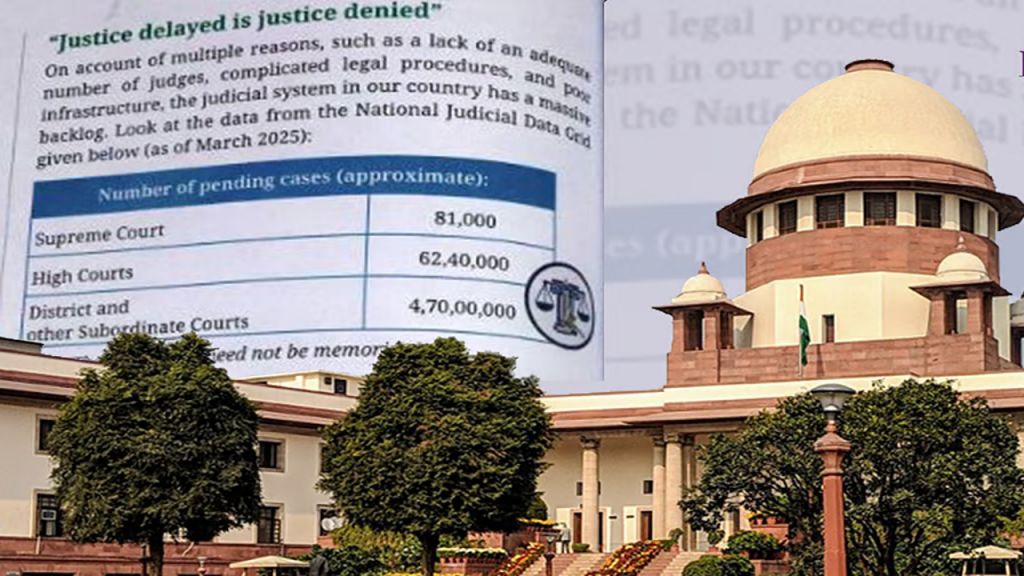
In In Re: Social Science Textbook for Grade-8 (Part 2), 2026, the Supreme Court took suo motu cognisance of references to “corruption in the judiciary” in an NCERT textbook.
Legal Basis
- Contempt of Courts Act, 1971 (Section 2(c)) – publication that scandalises the court
- Supreme Court’s inherent powers to protect institutional dignity
What the Court Held (Prima Facie)
- The content may amount to criminal contempt
- Fair criticism is protected, but content that undermines public confidence may cross constitutional limits
Directions Issued
- Nationwide ban on printing, reprinting, and digital circulation
- Seizure of copies
- Show-cause notices to Ministry of Education and NCERT
- Accountability of authors and review committees
Implications
Raises a crucial debate on academic freedom vs contempt law, and the threshold for institutional criticism in educational material.
Doctors Under Consumer Protection Act – Reconsideration of 1995 Precedent
Case Background
In Association of Healthcare Providers (India) v. Union of India, hospitals and doctors challenge their inclusion as “service providers” under consumer law.
Existing Law
The controlling precedent is Indian Medical Association v. V.P. Shantha, which brought paid medical services within consumer jurisdiction.
Issues Raised
- Medical services are skill-based and uncertain, not commercial transactions
- Consumer litigation promotes defensive medicine
- Consumer fora lack technical medical expertise
- Professional discipline already exists through NMC
Current Status
Notices issued to Union Government and NMC. The Court’s final ruling may reshape medical negligence litigation in India.
Also Read: Supreme Court Reviews Doctors under Consumer Protection Act 2019
https://vidhigya.com/blog/doctors-under-consumer-protection-act-2019/
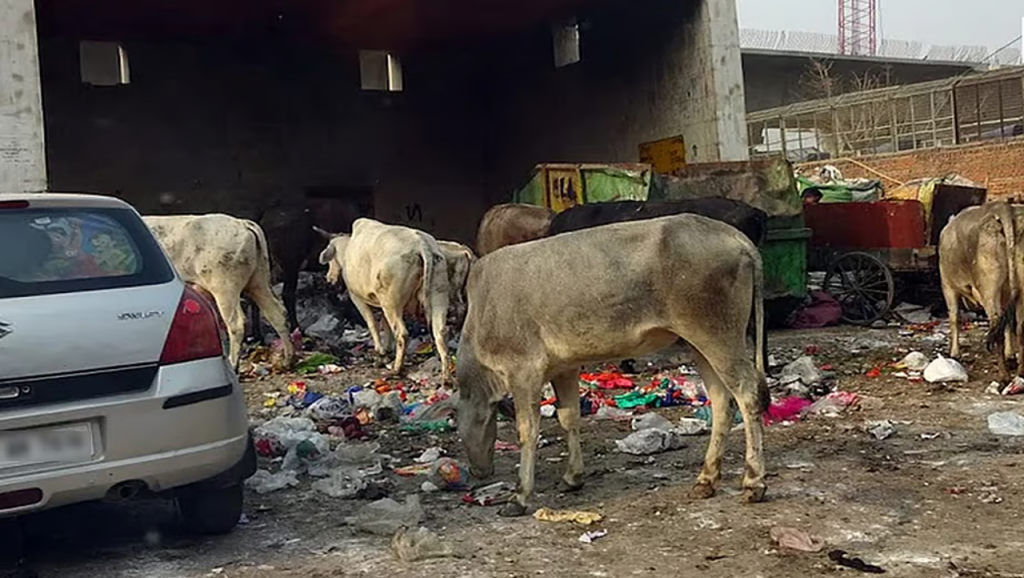
Pan-India Directions on Solid Waste Management Rules, 2026
Case Background
In Bhopal Municipal Corporation v. Dr. Subhash C. Pandey, the Supreme Court addressed uneven compliance with SWM Rules and the persistence of legacy dumpsites.
What the Court Held
- Clean environment is part of Article 21 (Right to Life)
- Implementation failure can no longer be treated as administrative lapse
Key Directions
- Four-stream segregation at source
- Time-bound remediation of dumpsites
- District Collectors to monitor compliance
- Performance ranking of cities on central portal
Enforcement Regime
- Immediate fines
- Criminal prosecution for continued violations
- Personal liability of officials
Implications
Strengthens environmental federalism, local governance accountability, and justiciability of environmental rights.
BCI Withdraws Moratorium on New Law Colleges
Background
The Bar Council of India imposed a three-year moratorium in August 2025 to curb mushrooming of low-quality law colleges.
What Happened in Court (23 Feb 2026)
BCI informed the Supreme Court that the moratorium has been withdrawn. The petitions were disposed, allowing institutions to apply for approvals under existing rules.
Significance
Reopens debate on regulatory standards vs access to legal education, with implications for quality control in law schools.
Conclusion
Legal Current Affairs February 2026 reflects the Supreme Court’s expanding role in institutional accountability, environmental governance, religious freedom, professional regulation, and digital constitutionalism. For the legal fraternity, these developments are not just exam-relevant but signal long-term doctrinal shifts in constitutional interpretation and regulatory law.