By Janvi Patidar
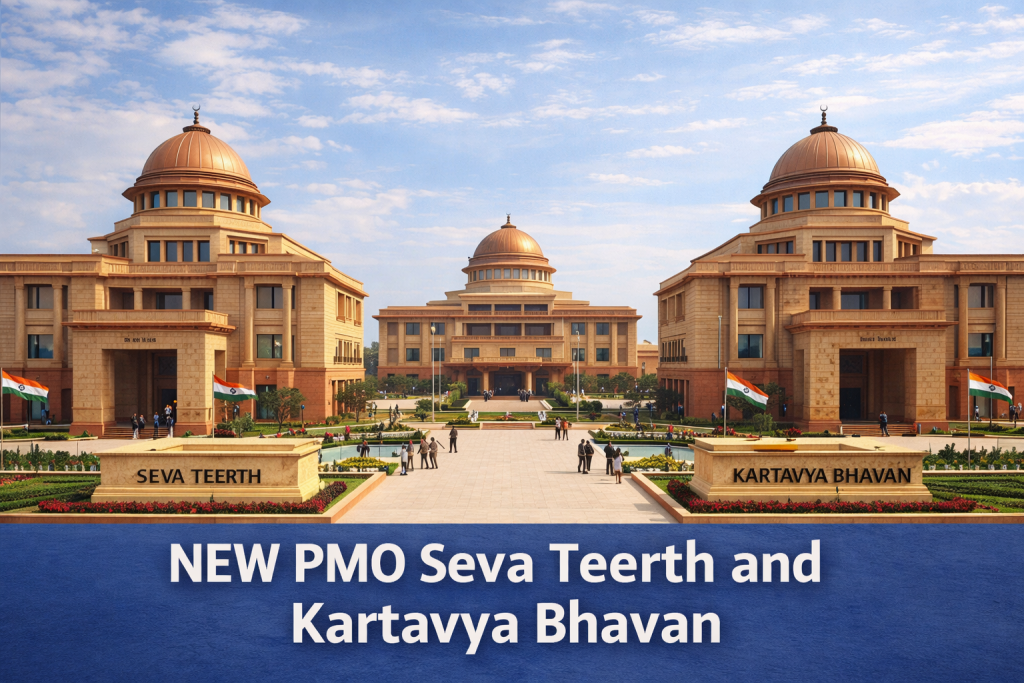
New PMO Seva Teerth and Kartavya Bhavan were inaugurated on 13 February 2026 by Prime Minister Narendra Modi in New Delhi. The inauguration marks a major step towards modern, efficient, and citizen-focused governance in India. The new administrative campus reflects India’s shift away from colonial-era structures to a system rooted in public service, transparency, and faster decision-making.
What Is New PMO Seva Teerth and Kartavya Bhavan?
New PMO Seva Teerth and Kartavya Bhavan together form a modern administrative campus. The PMO, Cabinet Secretariat, and National Security Council Secretariat now work from one location.
Earlier, these offices operated from separate buildings. This caused delays and coordination issues. The new setup improves speed and efficiency in top-level governance.
Kartavya Bhavan 1 and 2: Centralising Key Ministries
New PMO Seva Teerth and Kartavya Bhavan aim to improve coordination among ministries. Kartavya Bhavan 1 and 2 now house key departments such as Finance, Defence, Health, Law, Education, Agriculture, and Culture.
Officials can now meet faster and work together easily. This setup reduces paperwork delays and improves policy execution.
Read more on Landmark Supreme Court Judgements 2025
👉 https://vidhigya.com/blog/landmark-supreme-court-judgements-2025/
Why the PMO Shifted from South Block
The PMO functioned from South Block for decades. However, the building lacked modern facilities. Space was limited. Digital security needs also increased.
By moving to New PMO Seva Teerth and Kartavya Bhavan, the government upgraded India’s governance infrastructure. The move also signals a break from colonial symbols of power.
What Will Happen to South Block and North Block?
The government will convert South Block and North Block into the Yuge Yugeen Bharat National Museum.
The museum will showcase India’s civilisational journey. This change preserves heritage while giving the buildings a new public purpose.
Why 13 February is Historically Significant
The choice of 13 February for the inauguration is symbolic. On this day in 1931, New Delhi was formally inaugurated as the capital during British rule. By inaugurating Seva Teerth on the same date in 2026, the government highlighted the transformation of India’s governance system from a colonial framework to a self-reliant and citizen-driven administrative model.
Why This Development Matters
New PMO Seva Teerth and Kartavya Bhavan improve governance in four key ways:
- Faster decision-making
- Better coordination among ministries
- Modern digital infrastructure
- Symbolic shift from colonial power centres
This change aligns India’s governance spaces with constitutional values and development goals.