Janvi Patidar | Legal & Current Affairs Faculty
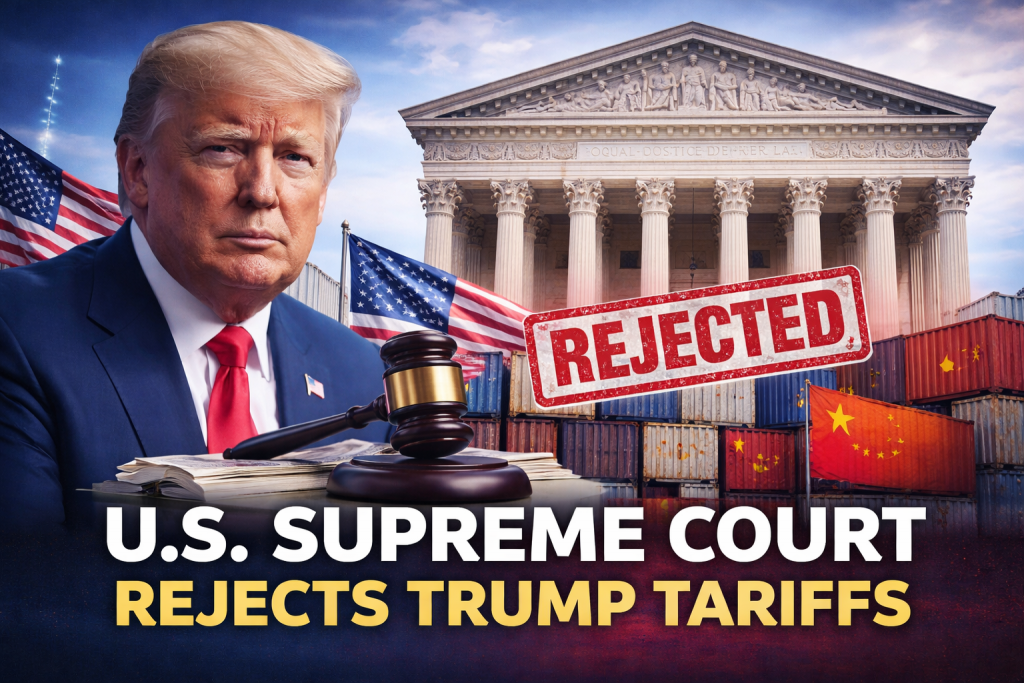
The U.S. Supreme Court rejects Trump tariffs in a landmark 6–3 ruling delivered on February 20, 2026. Through this decision, the Court struck down one of the most controversial trade policies introduced by former U.S. President Donald Trump. The judges found that Trump crossed his constitutional limits by using a national emergency law to impose wide import duties on most U.S. trading partners.
As a result, this verdict affects global trade, limits executive power in the United States, and reshapes India–U.S. trade relations. Although steel and aluminium tariffs continue, the broader tariff system under emergency powers now stands invalid.
First — What Are Tariffs?
A tariff is a tax on imported goods.
For example, when the United States imposes a tariff on Indian steel, the American importer pays extra. In most cases, companies pass this cost on to consumers through higher prices. Moreover, governments use tariffs to protect domestic industries and regulate trade. However, sudden tariff hikes disturb supply chains and raise costs for both businesses and buyers.
U.S. Supreme Court Rejects Trump Tariffs: What Did Trump Do?
In April 2025, Donald Trump declared trade deficits a “national emergency.”
After that, he used the International Emergency Economic Powers Act (IEEPA), 1977 to impose “reciprocal tariffs” on almost every country.
In theory, this meant that if another country taxed U.S. goods, the U.S. would respond with similar tariffs. In practice, the move affected nearly 180 countries and reshaped global trade flows overnight.
U.S. Supreme Court Rejects Trump Tariffs: Why Was This Controversial?
The U.S. Constitution clearly gives Congress the power to impose taxes and tariffs. The President does not hold this power.
Earlier, governments used IEEPA mainly for sanctions and asset freezes. They never used it to impose general import taxes.
Therefore, Trump bypassed Congress by using emergency powers for tariffs. Because of this, legal experts, business groups, and even members of his own party criticised the policy.
U.S. Supreme Court Rejects Trump Tariffs: What Did the Court Rule?
The Supreme Court, by a 6–3 majority, ruled that Trump could not use IEEPA to impose global tariffs. The Court explained that the 1977 law does not mention tariffs and never intended to grant such wide economic power to the President.
Small businesses and 12 U.S. states filed the legal challenge. Earlier, lower courts had ruled against Trump. The Supreme Court confirmed those rulings and reinforced that Congress controls trade taxation.
What Changes After the Verdict?
After the judgment, the U.S. government announced a temporary 10% import surcharge for 150 days. This rate is much lower than Trump’s earlier global tariffs.
As a result:
- The emergency-based global tariffs no longer apply
- Steel and aluminium duties continue
- The government may try other legal routes for limited tariffs
- Businesses can seek refunds for wrongly collected duties
Therefore, exporters now face less uncertainty.
Impact on India: Lower Tariffs and Trade Stability
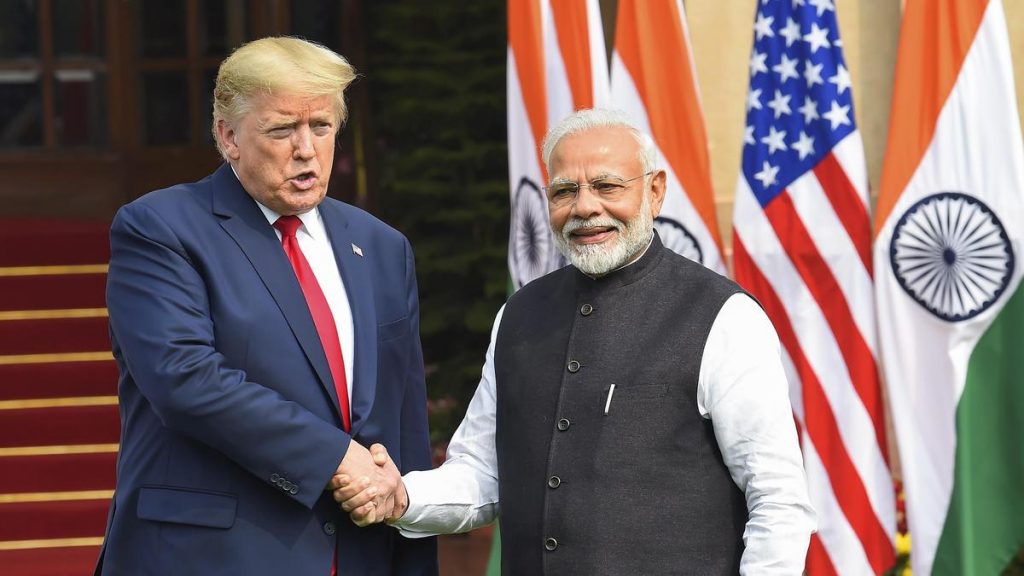
The verdict benefits India. After the ruling, tariff rates on Indian goods fell from around 18% to 10%. This change improves the price competitiveness of Indian products in the U.S. market.
Consequently, sectors such as pharmaceuticals, textiles, engineering goods, and electronics gain an advantage. In addition, the ruling reduces the risk of sudden political tariffs on India in the future.
Why This Judgment Matters for Global Trade
Earlier, Trump’s tariff regime disrupted supply chains and confused businesses. Now, the Court’s decision brings stability by limiting sudden tariff actions.
Furthermore, this ruling strengthens legislative control over trade policy. As a result, future U.S. governments must design trade restrictions within constitutional limits.
Also Read: Supreme Court Reviews Doctors under Consumer Protection Act, 2019
https://vidhigya.com/blog/doctors-under-consumer-protection-act-2019/
Executive Power vs Constitutional Limits
This case reasserts constitutional boundaries in the U.S. system. Although Presidents can act during emergencies, they cannot override Congress on taxation and tariffs.
Therefore, the ruling protects democratic accountability. Since trade policy affects citizens, industries, and foreign relations, lawmakers must debate such decisions in Parliament.